Explore Boston’s village-like neighborhoods: 15–35 min commutes, 0.5–1 mi school walks, BPS investment, parks, and pediatric care nearby.
Written ByRahel Choi
PublishedJune 25, 2026
I'm Rahel Choi, a bilingual (English/Korean) Natick, MA real estate agent helping first-time buyers, families, and investors across MetroWest—from first search to closing. Serving Natick, Brookline, Cambridge, Wellesley, Ashland, Wayland, Southborough, Weston, Framingham, Sudbury, Boston, Newton and Needham, MA.
Boston, MA
Region
In July 2026, the median sale price for homes in Boston, MA was $879,500, up 7.3% from a year earlier.
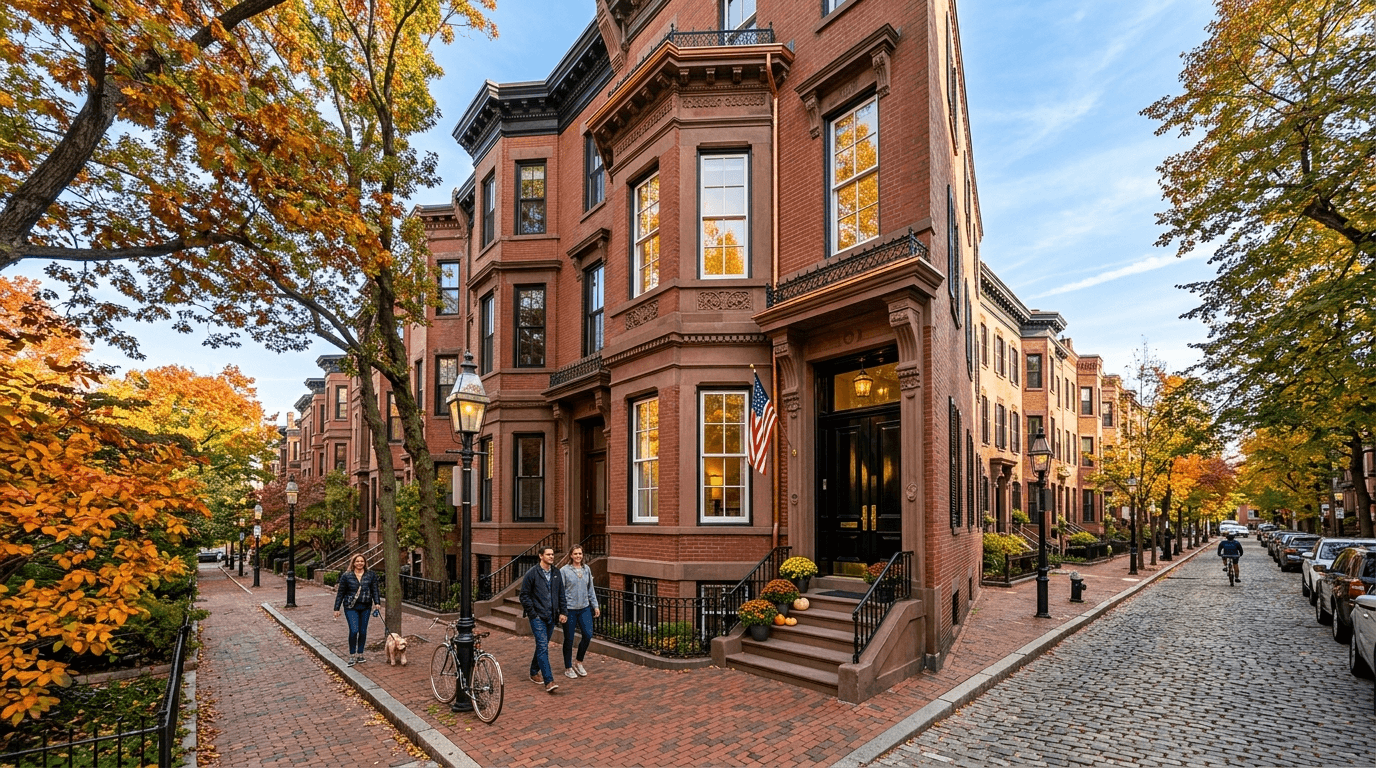
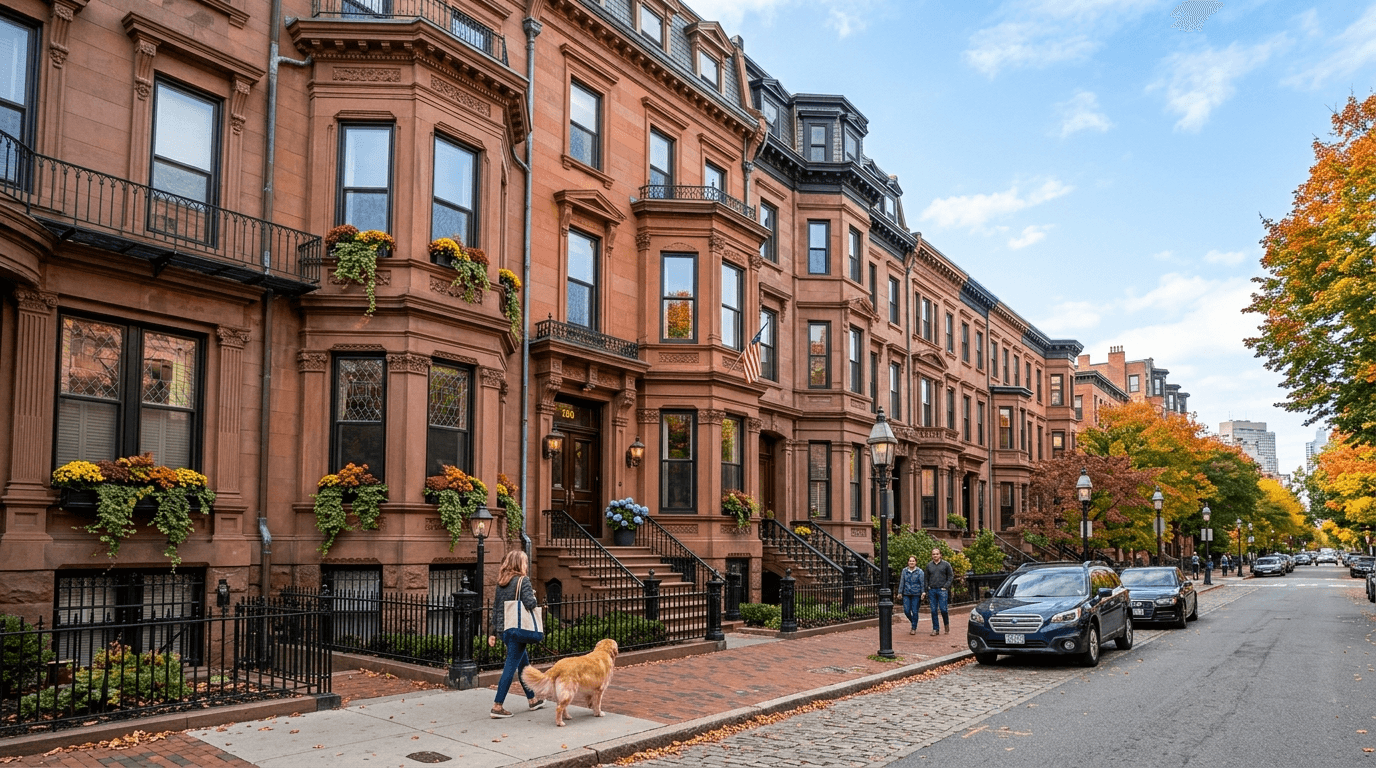
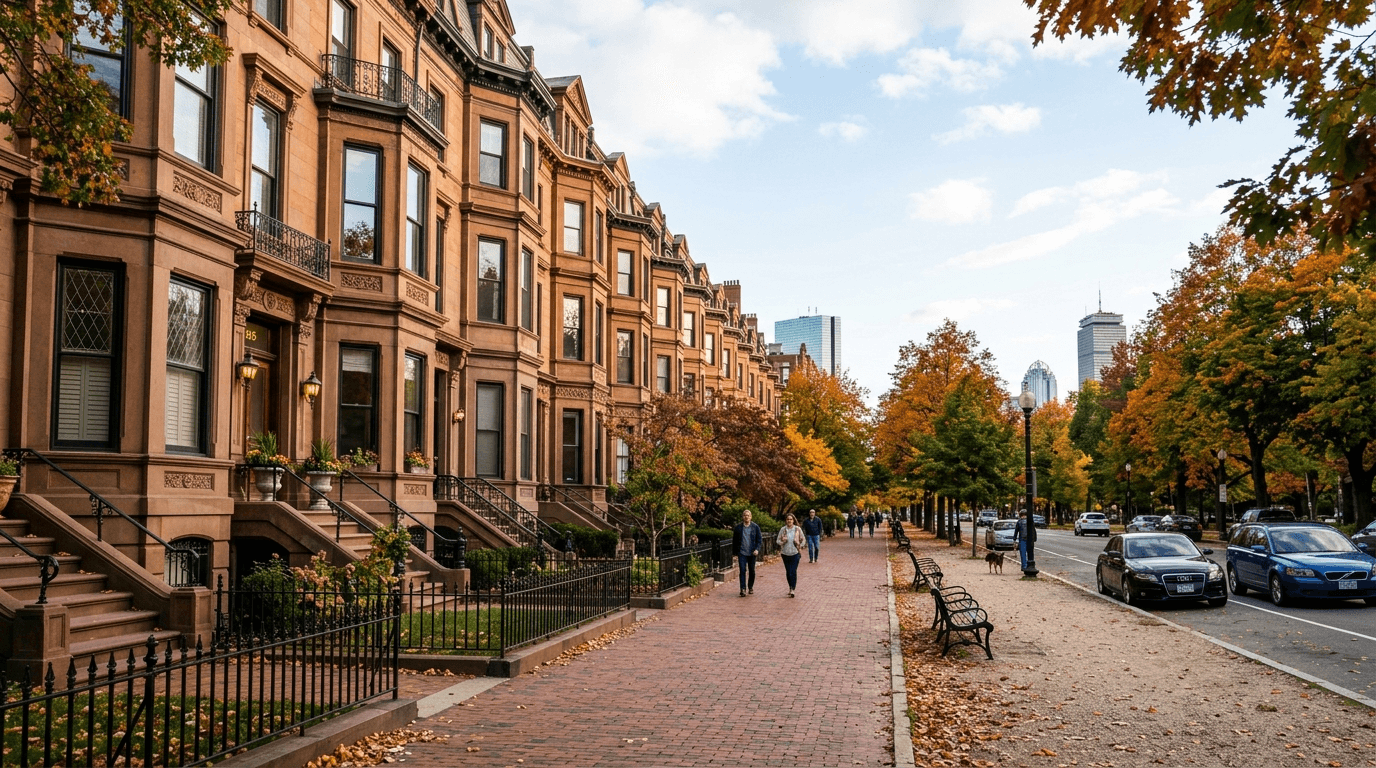
Moving to Boston with little ones is equal parts thrilling and complicated. Here's the reassuring part: Boston's historic neighborhoods were practically made for family life. The streets are walkable, the blocks are close-knit, and the whole place was laid out long before cars took over. This guide gets into the everyday stuff that actually matters—how you'll get to work, where the kids will go to school, and how you'll juggle grocery runs, gas stops, and pediatrician visits once you're settled in.
So let's talk specifics.
How Is the Commute From Boston, MA Family Neighborhoods to Downtown?
Most of Boston's family-friendly neighborhoods sit within a 15–35 minute commute to downtown, with the MBTA Red and Green lines doing much of the heavy lifting for working parents. That said, commute time varies quite a bit by neighborhood, so it's worth weighing carefully against wherever you'll be dropping the kids each morning.
Whenever I walk families through their options, the commute is almost always the first thing they bring up—and for good reason. When you've got a stroller in one hand, a backpack over your shoulder, and a coffee you're trying not to spill, a predictable morning means everything. Here's how the neighborhoods compare on average commute times:
Commute Times to Factor Into Boston Family Life
A neighborhood commute comparison using consistent minute-based values, useful for families weighing school drop-offs, work commutes, and daily routines.
A neighborhood commute comparison using consistent minute-based values, useful for families weighing school drop-offs, work commutes, and daily routines.
The citywide average lands at 29 minutes. Neighborhoods like Allston (28 minutes) and Jamaica Plain (30 minutes) hover right around that mark. West Roxbury (32 minutes) and Mattapan (34 minutes) run a little longer, usually because they sit farther from the urban core and rely more on driving and bus connections.
A few practical things I've learned from the ground:
•Parking is permit-based. Most residential streets require a resident parking permit. It's free, but it's tied to your address and vehicle registration. Many of the historic homes I tour—especially in Charlestown and the old streetcar suburbs—come with a dedicated tandem driveway spot, which is a genuine luxury in this city. If parking matters to you, say so early. It can make or break your daily routine.
•The T is your friend. Families who live near a Red or Green line stop often skip the car for the morning commute entirely. It's one of the things that makes Boston feel less like a sprawling metro and more like a string of connected villages.
•Highway access is easy for weekend getaways. I-93 and I-90 (the Mass Pike) are never far, so escaping to the Cape, the Berkshires, or up to New Hampshire with the kids is refreshingly simple.
The city is putting real effort into safer streets, too. Reconstruction on Cummins Highway in Mattapan is underway with accessible sidewalks and upgraded crossings, and projects across the Seaport corridor are adding separated bike lanes and better street lighting—all of which make everyday neighborhood travel calmer and safer for families.
How Close Are Schools in Boston, MA's Family Neighborhoods?
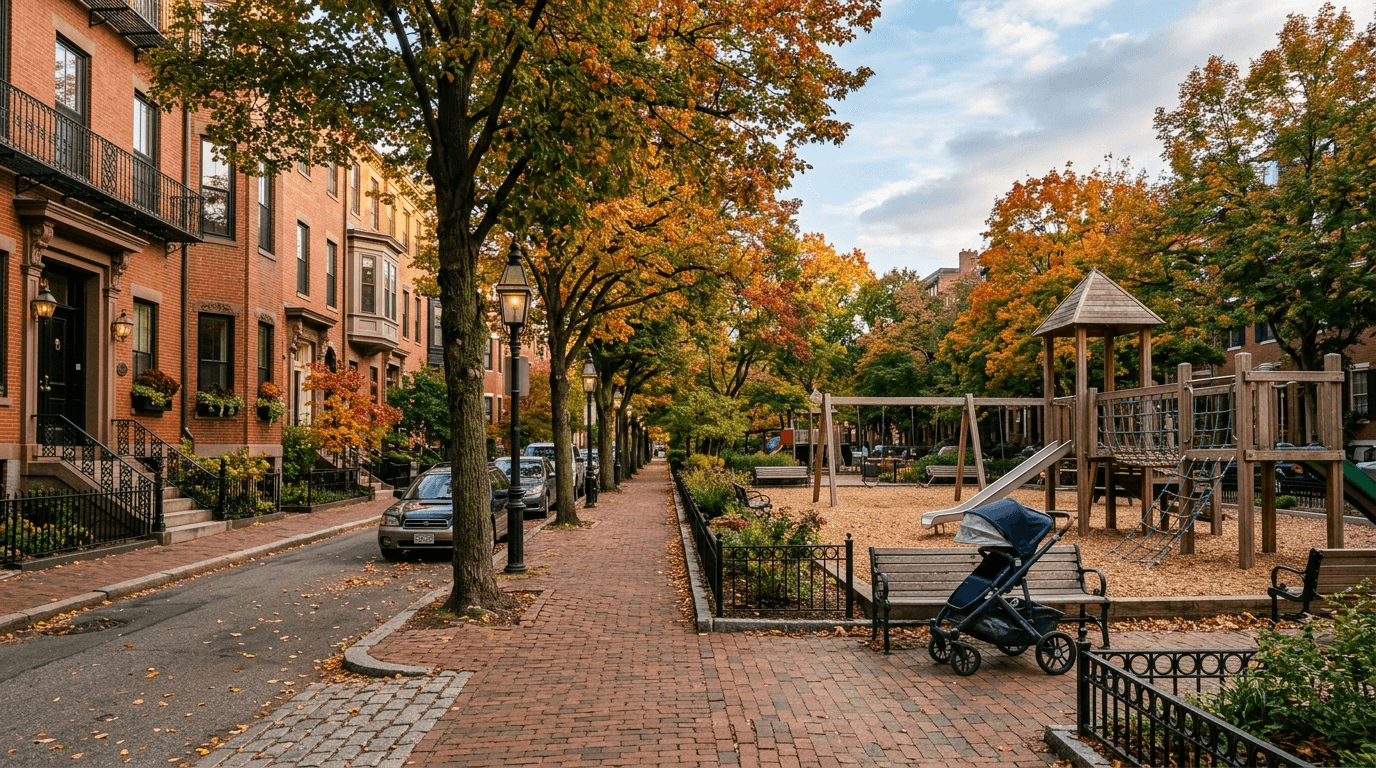
In most of Boston's historic family neighborhoods, top-rated elementary schools sit within a comfortable 0.5- to 1-mile walk, and local high schools are typically a short 10–15 minute bus ride away. That morning walk to school—down tree-lined, sidewalk-lined blocks—becomes one of those small daily rituals families here truly treasure.
The parents I work with consistently ask two questions: "Is the walk safe?" and "How good are the schools?" On the safety front, Boston's older neighborhoods were built for people on foot, with continuous sidewalks, crossing guards at the busy intersections, and that front-porch familiarity where neighbors genuinely look out for one another.
On the schools, it helps to understand how Boston Public Schools (BPS) invests in its students. The district is putting real money behind the classroom, and you can see exactly where it's headed in the FY26-to-FY27 budget shift:
Boston Public Schools Budget: FY26 vs FY27
For school-focused movers, this compares the main Boston Public Schools budget categories from FY26 to FY27 using consistent dollar units.
FY26
FY27
For school-focused movers, this compares the main Boston Public Schools budget categories from FY26 to FY27 using consistent dollar units.
Here's what I love to point out: Direct School Expenses are climbing from $1.015B to $1.055B, while Central Administration spending is actually dropping from $133M to $111M. In plain terms, more dollars are flowing toward classrooms and the kids themselves, and away from back-office overhead. All told, the BPS operating budget grows from $1.64B to $1.73B—an $88M increase year over year.
There's meaningful support for the littlest learners, too. BPS is projecting enrollment of 4,508 three- and four-year-olds in early childhood programs, backed by 3,172 BPS K0/K1 seats and 1,336 additional community-based seats. If you've got toddlers, that early-education pipeline is a real factor when you're deciding where to land.
A few logistics worth planning around before you lock in a move date:
Boston Public Schools 2026-2027 Family Calendar Essentials
A family logistics table highlighting the school-year anchors, major recess weeks, and early dismissal dates families often need before choosing move timing or childcare coverage.
The 2026–2027 school year starts Thursday, September 10, 2026 and wraps up Tuesday, June 21. Watch the recess weeks closely—Winter Recess (December 24–January 1), February Recess (February 15–19), and Spring Recess (April 19–23)—because those are exactly when you'll need childcare coverage or a travel plan in place. The early dismissal dates (October 6 and November 25) have a way of sneaking up on new parents, so I always tell families to mark them the moment they enroll.
What Are the Day-to-Day Essentials Like for Families in Boston, MA?
Boston families enjoy genuinely short distances to the essentials: major grocery stores are usually a 5–10 minute drive or a walkable trip away, gas stations sit within about 2 miles along the main arteries, and world-class pediatric care at Boston Children's Hospital is just 15–20 minutes from most neighborhoods. This is where the city's density really works in your favor.
Groceries are rarely a hassle. Downtown families lean on Roche Bros. Downtown Crossing for a full-service run, and Whole Foods and Trader Joe's locations are scattered across the neighborhoods within an easy drive or stroller walk. Pharmacies—CVS and Walgreens—are practically on every other corner, which matters more than you'd think when you've got a sick kid at 9 p.m. and need children's medicine fast.
For the inevitable scraped knees and ear infections, the peace of mind here is hard to overstate. Boston is home to some of the finest medical institutions in the country, and Boston Children's Hospital sits within a 15–20 minute reach of most family neighborhoods. That single fact reassures every relocating parent I've ever worked with. The Longwood Medical Area, where so much of that care is concentrated, is one of the most accessible healthcare and employment hubs in the city.
Outdoor space is part of the daily rhythm, too. The city has been steadily investing in parks and playgrounds, with a real pipeline of family-friendly green space on the way:
Boston Parks and Playground Renovation Pipeline
A project-style summary of park and playground improvements that matter to relocating families looking for nearby outdoor space and kid-friendly neighborhood amenities.
Renovations at Harambee Park, Walsh Playground, and Codman Square Park are already done, while Copley Square and Clifford Park are nearing the finish line. For weekend mornings closer to downtown, families gravitate toward the Rose Fitzgerald Kennedy Greenway , a scenic ribbon of green that's perfect for letting the kids burn off energy after a museum visit.
An Honest Note on Costs in Boston, MA
I'd be doing you a disservice if I didn't talk frankly about money. Boston is a wonderful place to raise a family, but it isn't a cheap one, and a clear-eyed budget is the best gift you can give yourself before you start house-hunting.
Here's the snapshot I share with every relocating family:
Boston 2026 Family Relocation Cost Snapshot
A quick relocation-planning snapshot for Boston families: current home prices, financing conditions, market speed, and the tax pressure buyers should budget for in 2026.
Buying Costs
Median Single-Family Price$857,000
Average Home Value (Zillow)$779,777
Financing
30-Year Fixed Rate (MA)6.19%-6.75%
Market Speed
Days on Market (Boston)20-32 days
Taxes
Projected Property Tax Increase13%
Source:Multiple sources: Sell in Boston, Boston Pads, GBH
The median single-family price currently sits at $857,000, with the Zillow average home value at $779,777. Financing is running in the 6.19%–6.75% range for a 30-year fixed in Massachusetts, and the market still moves fast—homes are selling in roughly 20–32 days. Looking ahead, forecasts point to modest appreciation of 2%–4% through 2026.
One line item that catches out-of-state buyers off guard is property taxes. Boston homeowners are looking at a projected 13% increase in their tax bills—an average of about $780 more per year. It's not a dealbreaker for most families, but it's exactly the kind of number you want baked into your monthly budget from day one, not discovered after closing.
My honest take: Boston rewards families who plan ahead. The neighborhoods are walkable, the schools are pouring money into classrooms, the medical care is world-class, and the sense of community on these historic blocks is the real draw. Sort out your financing and your school calendar early, weigh your commute against your daily school run, and the rest of this remarkable city will start to feel like home faster than you'd ever expect.
How long is the commute from Boston, MA family neighborhoods to downtown?
Most family-friendly Boston neighborhoods are about 15–35 minutes from downtown. The citywide average commute is about 29 minutes, with Allston around 28 minutes, Jamaica Plain around 30 minutes, West Roxbury around 32 minutes, and Mattapan around 34 minutes.
Is Boston, MA a good place for young families to live?
Boston, MA can work well for families who want walkable streets, tight-knit blocks, and short distances to daily essentials. Many historic neighborhoods have sidewalk-lined streets, access to transit, and grocery stores, pharmacies, parks, and medical care within a practical daily range.
How close are schools in Boston, MA family neighborhoods?
In many historic family neighborhoods in Boston, MA, top-rated elementary schools are typically within a comfortable 0.5- to 1-mile walk. Local high schools are generally a short 10–15 minute bus ride away.
What should families know about Boston, MA public schools?
Boston Public Schools is increasing its total operating budget from $1.64B to $1.73B, an $88M year-over-year increase. Direct School Expenses are rising from $1.015B to $1.055B, while Central Administration spending is decreasing from $133M to $111M, meaning more funding is moving toward classrooms and student-facing services.
Do families in Boston, MA need a car?
Families in Boston, MA often use the MBTA Red and Green lines for commuting, especially when they live near a station. Residential street parking is commonly permit-based, and the permit is tied to the resident’s address and vehicle registration.
What should families know about parking for Boston, MA condos and townhomes?
Families comparing condos, townhomes, and historic homes in Boston, MA should check parking early. Many residential streets require resident permits, and dedicated driveway parking is a valuable feature when it is available, especially in older neighborhoods.
How expensive is it to buy a family home in Boston, MA?
The median single-family home price in Boston is $857,000, and the Zillow average home value is $779,777. Massachusetts 30-year fixed mortgage financing is in the 6.19%–6.75% range, and homes are selling in roughly 20–32 days.
What housing costs should Boston, MA buyers plan for besides the mortgage?
Boston homeowners should budget for a projected 13% increase in property tax bills, averaging about $780 more per year. This is an important cost to factor into monthly housing budgets before buying.