West Natick Relocation Handbook for Young Families
West Natick’s tree-lined village vibe: 30–40 min rail to Boston, Brown Elementary nearby, $12.17 tax rate, groceries within 2.5 miles.
# West Natick: A Historic, Family-Friendly Haven for Your Next Chapter
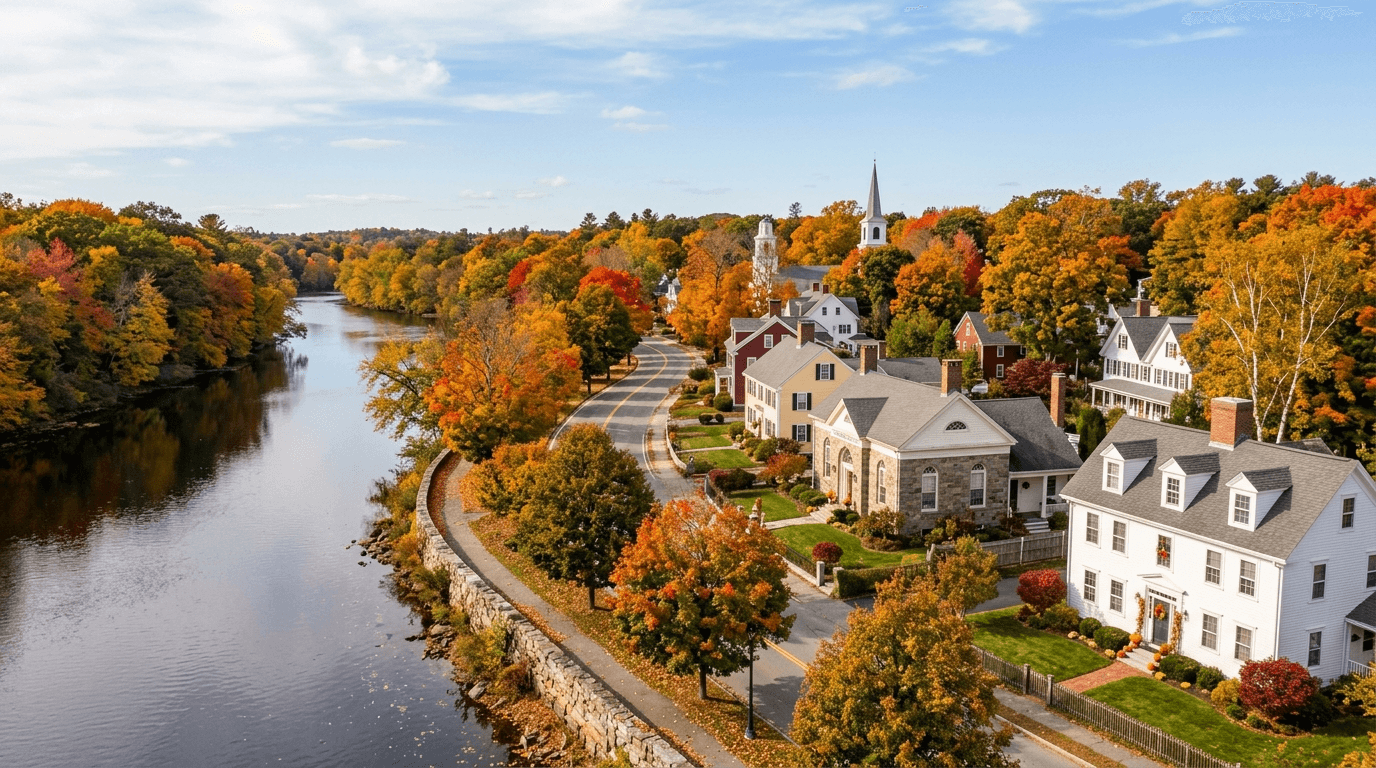
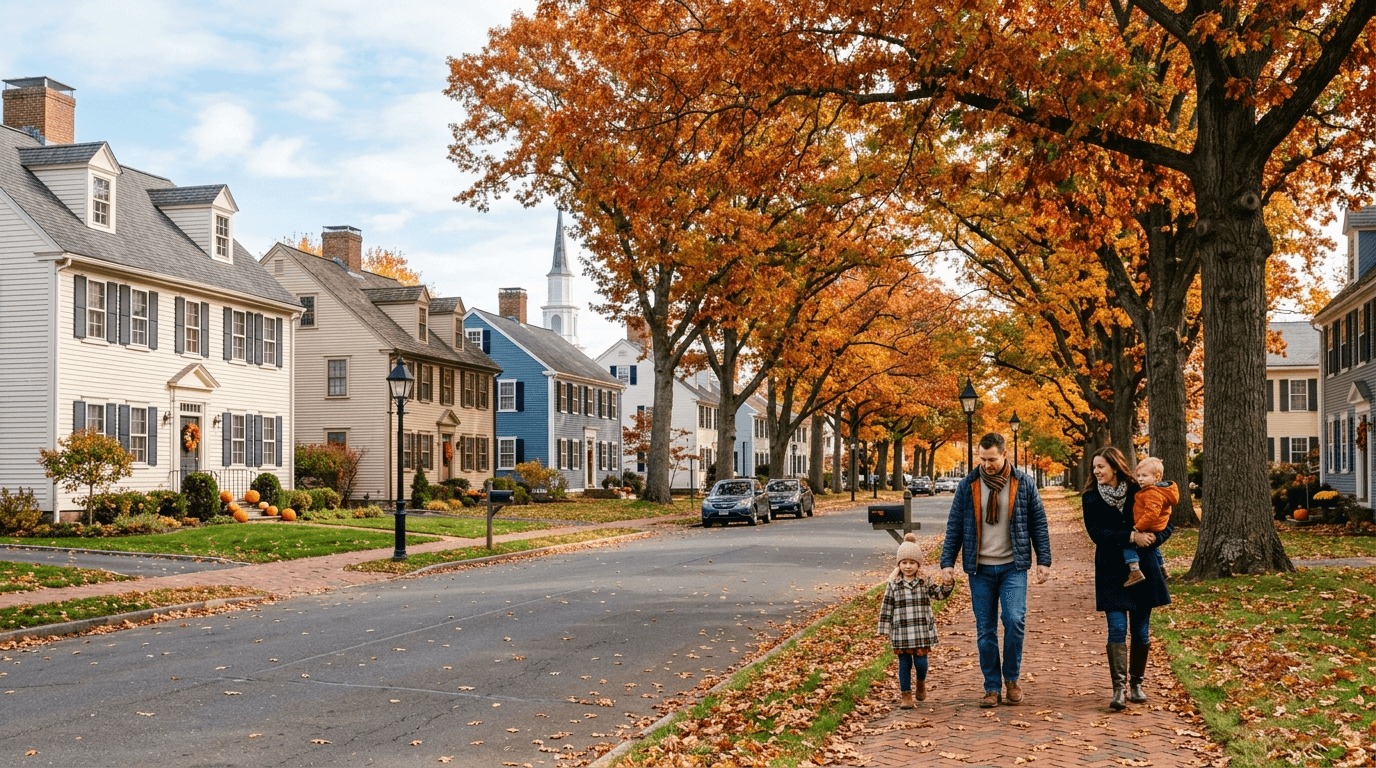
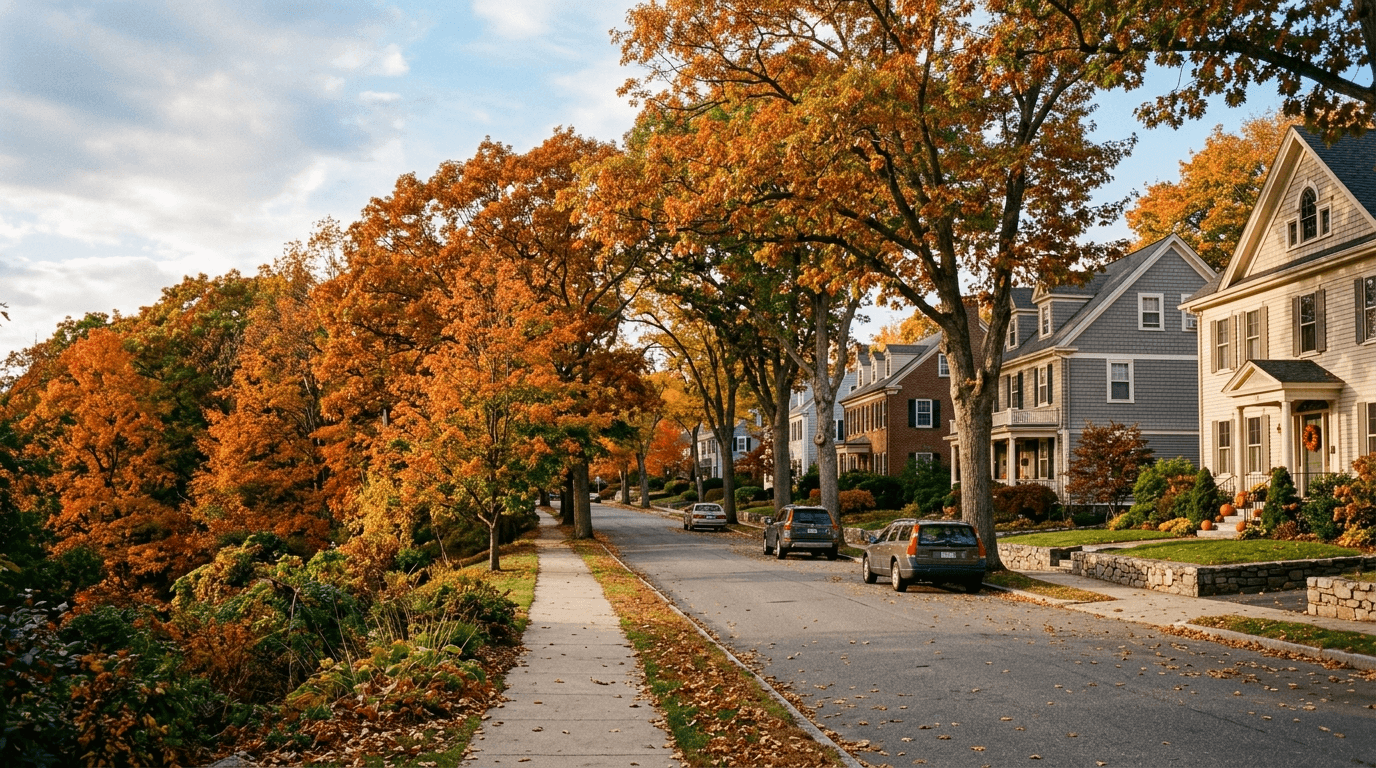
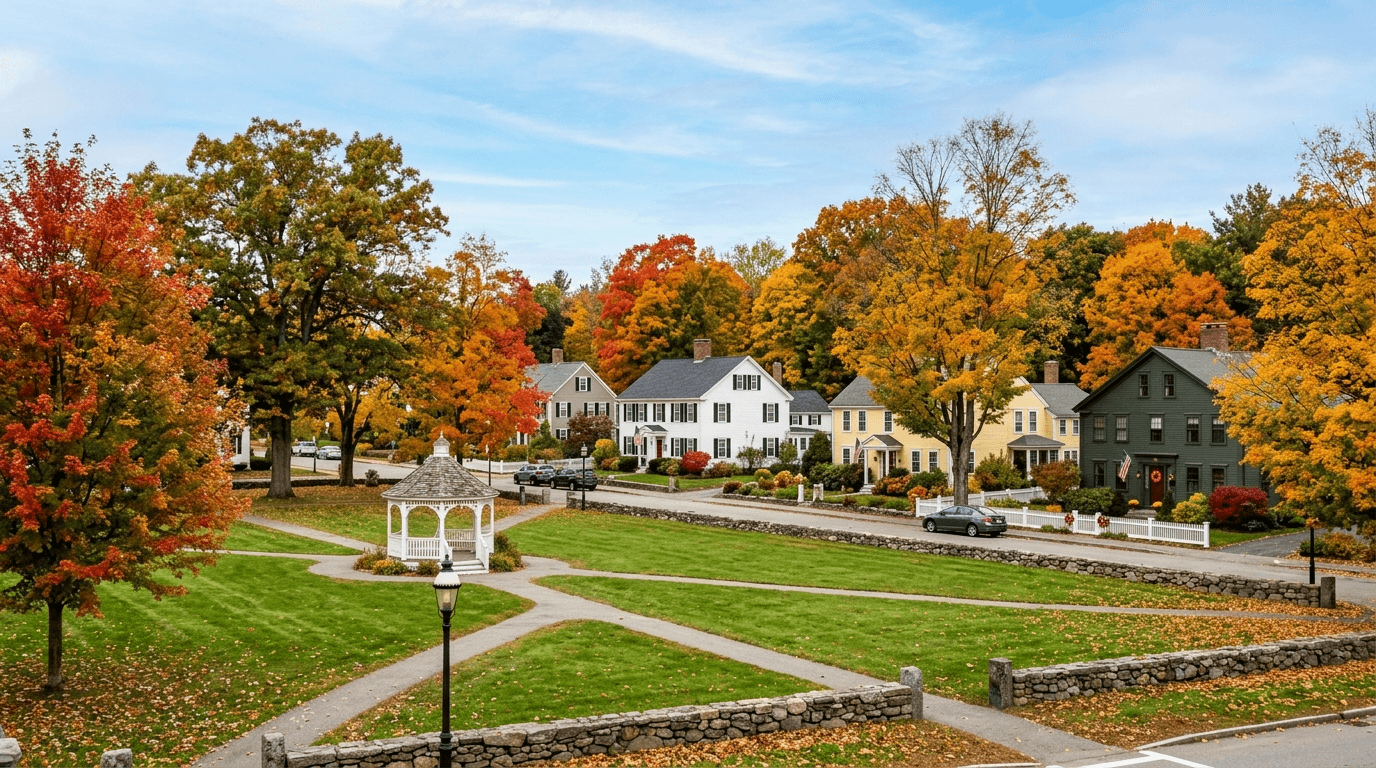
West Natick is the part of town I find myself pointing growing families toward again and again. When folks want a little more breathing room but aren't ready to give up the conveniences of MetroWest, this is where I send them. You get larger lots, friendlier entry-level pricing than you'll find in Natick Center, and that tree-lined village feel where neighbors actually know each other — all while staying a short hop from the commuter rail and the highways. So let's talk through the practical stuff: the commute, the school run, the daily errands, and what you should budget. These are the details that really matter when you're planning a move.
How is the commute from West Natick to Boston?
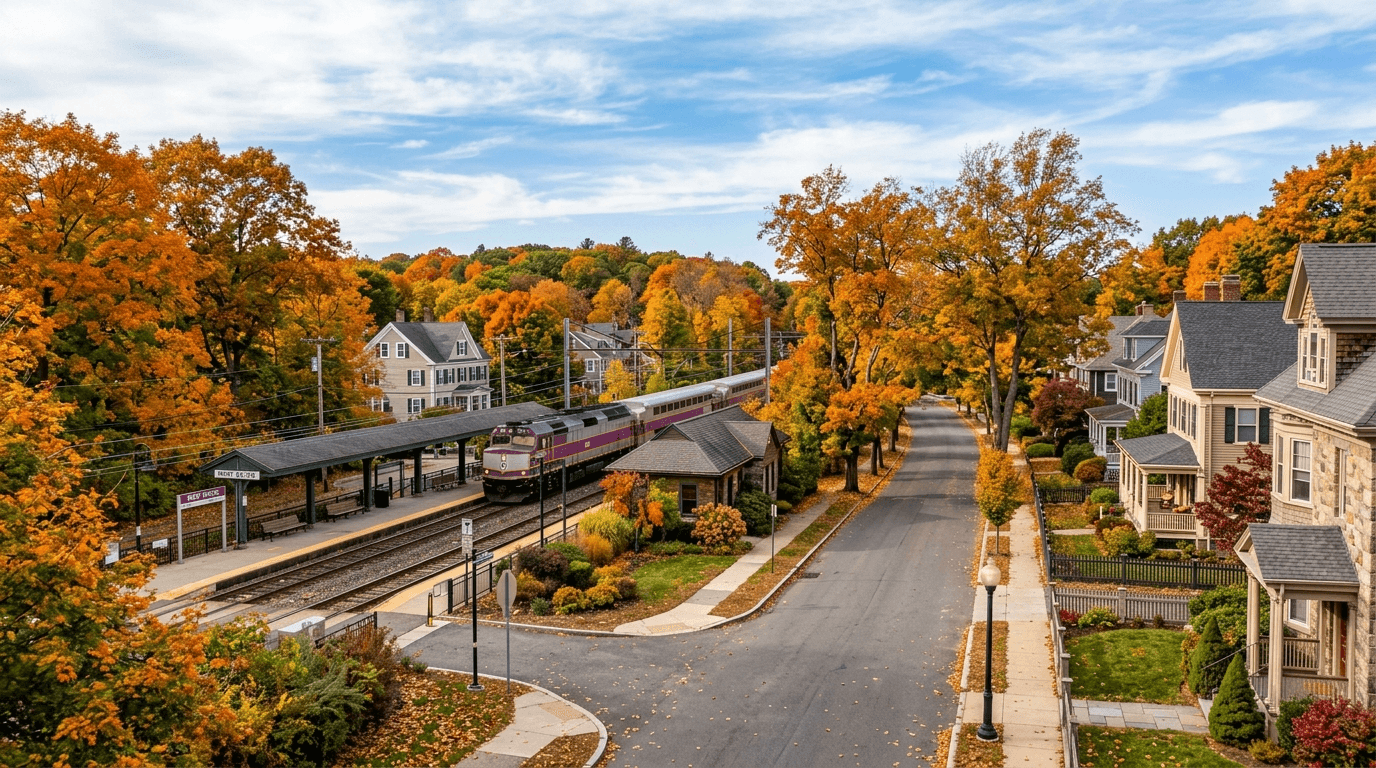
Short answer: West Natick is built for commuters. The West Natick MBTA Commuter Rail station puts you on a direct Framingham/Worcester Line train into Boston's South Station. Natick has two rail stops in all, and the typical ride downtown runs roughly 30–40 minutes.
Family Relocation Logistics: Transit, Inventory, and Housing Stock
A practical move-planning snapshot for young families: Natick offers commuter-rail access to Boston, but buyers should plan for older housing stock and limited vacancy.
When I'm showing homes near the West Natick station, the first thing working parents notice is that they can leave the car at home. The station offers plenty of daily parking, so your morning doesn't start with a scramble for a spot. For families coming out of the denser parts of Greater Boston, this is exactly the trade so many of my clients are after — that quiet village calm, with a train platform within easy reach.
Prefer to drive on a given day? You're about ten minutes from the Mass Pike (I-90) and Route 9, which open up the whole region: Newton, Wellesley, Framingham, and beyond. I'll be honest about one of West Natick's few drawbacks — traffic around Route 9 and the mall corridor can get heavy at peak hours. But once you know that, it's easy to plan around. Most families I work with simply build their routines around the rail line and the quieter side streets.
Where will my kids go to school in West Natick?
Short answer: West Natick families are close to both elementary and high school options, with safe, walkable streets in the historic districts. Brown Elementary School sits centrally, usually within a 1- to 2-mile drive of most West Natick homes, and Natick High School is about 3 miles away — a straightforward 8-minute morning drive.
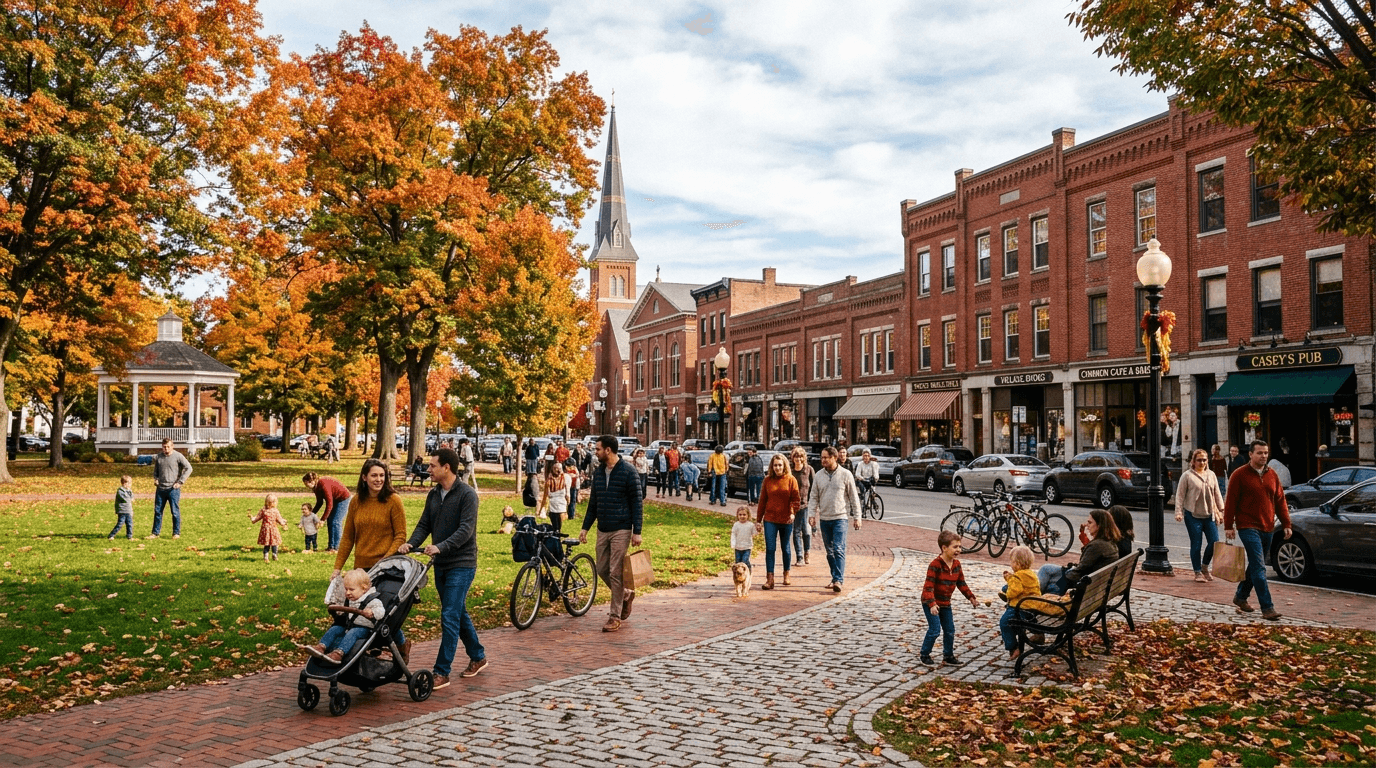
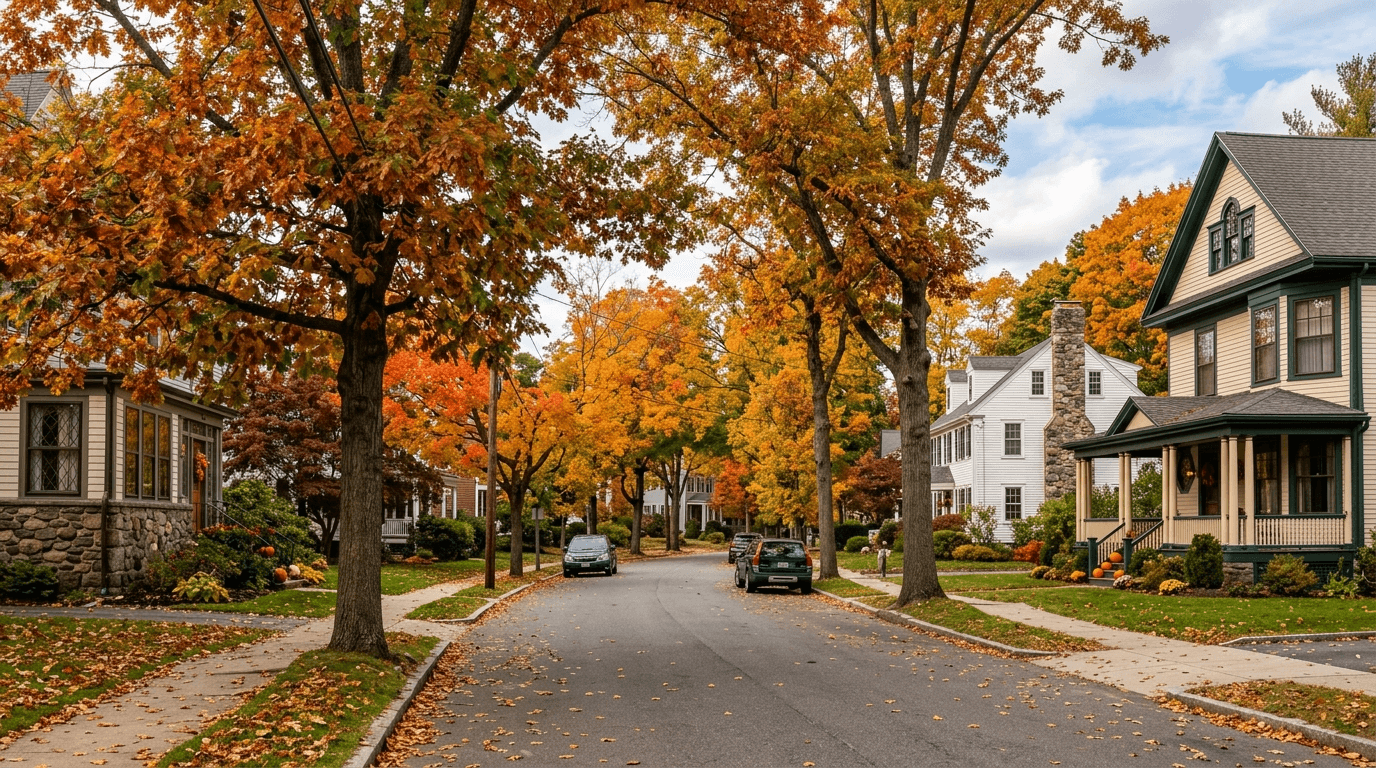
The question I hear most on tours is whether the kids can walk. In the older, tree-lined sections of West Natick, the sidewalks make that a genuine option, not just a nice thought. That walkability is a big part of the historic charm families fall for here.
For the little ones, West Natick has a strong base of early-childhood and daycare options. Places like Next Generation Children's Center give parents flexible, well-regarded care before kindergarten. Natick Public Schools also runs its own preschool program, and the most recent enrollment snapshot (October 1, 2024) counted 124 preschool students across three sites: 64 at the East program, 52 at the program housed near Natick High School (NHS), and 8 at the Brown/Hunnewell-area site (BH). The takeaway for a relocating family is simple — that early-childhood capacity is real, but it's spread across town, so it's worth touring the specific site your home is zoned near.
$96.9MNPS Roll Up (Level-Service)
Natick Public Schools FY26 Budget Planning
A logistics-critical school funding card for relocating families: it summarizes the FY26 budget gap, planned reductions, fee increases, and potential staffing impacts discussed in Natick Public Schools’ override materials.
I always want families walking in with eyes wide open, so here's the candid part of the school conversation. Natick Public Schools entered FY26 facing a budget gap. The district's level-service "roll-up" came to $96.9M, while the town's preliminary budget figure was $92.7M — a $4.2M shortfall. To address it, the district laid out roughly $2.8M in planned reductions: about $2.07M in staff reductions, $480,000 in fee increases, and $250,000 in curricular resource cuts. To be clear, that $2.8M doesn't fully close the $4.2M gap on its own — which is exactly why an override was on the table. Without one, the district projected as many as 39–41 full-time-equivalent positions could be cut; with or without an override, about 10 FTE reductions were planned for FY26.
None of this is meant to scare you off. It's just the kind of civic detail I'd want to know before I bought. School budgets and overrides are live conversations in plenty of strong Massachusetts districts, and Natick's engaged community shows up for them. I always encourage families to sit in on a school committee meeting or two before they buy, just to get a feel for where things stand.
Is West Natick a safe place to raise a family?
Short answer: Yes — Natick's violent crime rate sits below both the state and national benchmarks. Natick records 2.12 violent crimes per 1,000 residents, compared with 3.15 for Massachusetts and a national median of 4.
Crime Rates per 1,000 Residents: Natick vs. Benchmarks
A family-focused safety comparison showing Natick’s violent crime rate below both state and national benchmarks, while property crime sits close to the Massachusetts rate and below the national median.
Property crime is the one to keep in perspective. Natick's rate of 11.34 per 1,000 is essentially in line with the Massachusetts figure of 11.12 and comfortably below the national median of 18. Over a full year, Natick logged 79 violent and 423 property incidents — 502 in total. That's a modest number for a community of more than 37,000 people.
The data simply confirms what I feel when I'm walking these neighborhoods: West Natick reads as calm, residential, and family-first. Parents here let their kids bike over to John J. Lane Park and treat the side streets like extensions of the backyard. For families coming from busier urban settings, that everyday sense of ease is often the thing that seals the deal.
What are daily errands and amenities like in West Natick?
Short answer: West Natick keeps the essentials close — groceries, gas, pharmacies, and a hospital are all within a few minutes' drive. Roche Bros. Natick and Stop & Shop both sit within roughly a 2.5-mile radius, which makes the weekly grocery run quick and predictable.
Day to day, you're well covered:
•Groceries: Roche Bros. and Stop & Shop within ~2.5 miles, with MOM's Organic Market nearby for the organic-focused shoppers.
•Gas & quick conveniences: Multiple stations and small shops line Route 135, less than 3 minutes from the neighborhood center.
•Pharmacies: CVS and Walgreens are close by for prescriptions and last-minute needs.
•Healthcare: MetroWest Medical Center in nearby Framingham is only about 4 miles away — genuine peace of mind for family emergencies.
For the bigger-ticket runs, Sherwood Plaza and the Natick Mall are just minutes away. The families I work with often tell me the real win here is logistical: school, groceries, the pharmacy, and the train all stitched into a 10-minute radius. The more urban pockets of Greater Boston give you walk-everywhere density, sure — but West Natick offers the quieter car-and-rail balance that actually fits family life.
What should families budget for property taxes in West Natick?
Short answer: Natick's residential tax rate for FY2026 is $12.17 per $1,000 of assessed value, with a median effective rate around 1.2%. On a median home priced near $899K, that comes out to roughly $10.8K a year — about $900 a month folded into your housing costs.
Natick Residential Tax Rate Trend, FY2016–FY2026
Recent property tax-rate history helps families estimate carrying costs beyond the mortgage. Natick’s FY2026 rate is slightly above FY2025 but below several earlier years in the past decade.
The trend is reassuring, too. Over the past decade, Natick's residential rate has drifted down from the mid-teens — $13.49 back in FY2017 — to $11.96 in FY2025, before ticking up modestly to $12.17 for FY2026. So even as home values have climbed, the rate itself has stayed relatively contained.
A few budgeting notes I share with every family:
•West Natick generally offers more accessible entry-level pricing and larger lots than Natick Center, so your tax bill is often anchored to a more reasonable assessment than a comparable downtown property.
•Natick remains a seller's market — homes have been moving in under three weeks, with sale-to-list ratios at 100%. Budget for a competitive offer, not just the list price.
•Much of the housing stock here is older — roughly 58% of Natick homes were built before 1960 — so factor maintenance and potential updates into your total cost of ownership.
Natick Spring 2026 Housing Snapshot
Headline relocation metrics for families trying to understand Natick’s spring 2026 market: pricing is high, homes move quickly, and sellers are still holding leverage.
That older housing stock is a big part of the charm, but it's also why I walk every client through the numbers carefully before they write an offer. My hope is that you come away from the whole process thinking, this is what buying a home should feel like — informed, unhurried, and genuinely supported. If you'd like to talk through any of these details in English or Korean, I'm here. 안녕하세요!
Is West Natick, MA a good place for young families?
West Natick offers a family-friendly setting with larger lots, more accessible entry-level pricing than Natick Center, and a tight-knit, tree-lined village feel. Families also benefit from close access to the commuter rail, highways, schools, parks, groceries, pharmacies, and healthcare within a practical daily radius.
How is the commute from West Natick, MA to Boston?
West Natick is built for commuters, with the West Natick MBTA Commuter Rail station providing direct Framingham/Worcester Line service to Boston’s South Station. Natick has two commuter rail stops overall, and the typical ride to downtown Boston is roughly 30–40 minutes.
What schools serve families in West Natick, MA?
Brown Elementary School is centrally located for many West Natick homes and is typically within a 1- to 2-mile drive. Natick High School is about 3 miles away, or roughly an 8-minute morning drive.
Is West Natick, MA walkable for kids and school routines?
West Natick has walkable, tree-lined streets in its older historic sections, and sidewalks can make walking to school or around the neighborhood a realistic option for some families. Parents should still evaluate the exact route from a specific home, because distances and street conditions vary by location.
Is Natick, MA safe for raising a family?
Natick’s violent crime rate is 2.12 per 1,000 residents, below both the Massachusetts rate of 3.15 and the national median of 4. Property crime is 11.34 per 1,000, close to the Massachusetts rate of 11.12 and below the national median of 18.
What should families budget for property taxes in Natick, MA?
Natick’s FY2026 residential tax rate is $12.17 per $1,000 of assessed value. For a median home near $899,000, that equals roughly $10,800 per year, or about $900 per month in property taxes.
Is West Natick, MA more affordable than Natick Center?
West Natick generally has more accessible entry-level pricing and larger lots than Natick Center. However, Natick remains a seller’s market, with homes moving in under three weeks and sale-to-list ratios at 100%, so buyers should plan for competition beyond the list price.
What should condo or townhome buyers know about costs in Natick, MA?
Condo and townhome buyers in Natick should account for the same townwide residential property tax rate of $12.17 per $1,000 of assessed value for FY2026. Buyers should also factor in total ownership costs carefully, because much of Natick’s housing stock is older, with about 58% of homes built before 1960.