Explore Newton’s village feel with 15 elementary schools, Green Line D Branch access, 35–45 min transit, and family errands minutes away.
Written ByRahel Choi
PublishedJune 25, 2026
I'm Rahel Choi, a bilingual (English/Korean) Natick, MA real estate agent helping first-time buyers, families, and investors across MetroWest—from first search to closing. Serving Natick, Brookline, Cambridge, Wellesley, Ashland, Wayland, Southborough, Weston, Framingham, Sudbury, Boston, Newton and Needham, MA.
Newton, MA
Region
In July 2026, the median sale price for homes in Newton, MA was $1,597,500, up 2.2% from a year earlier.
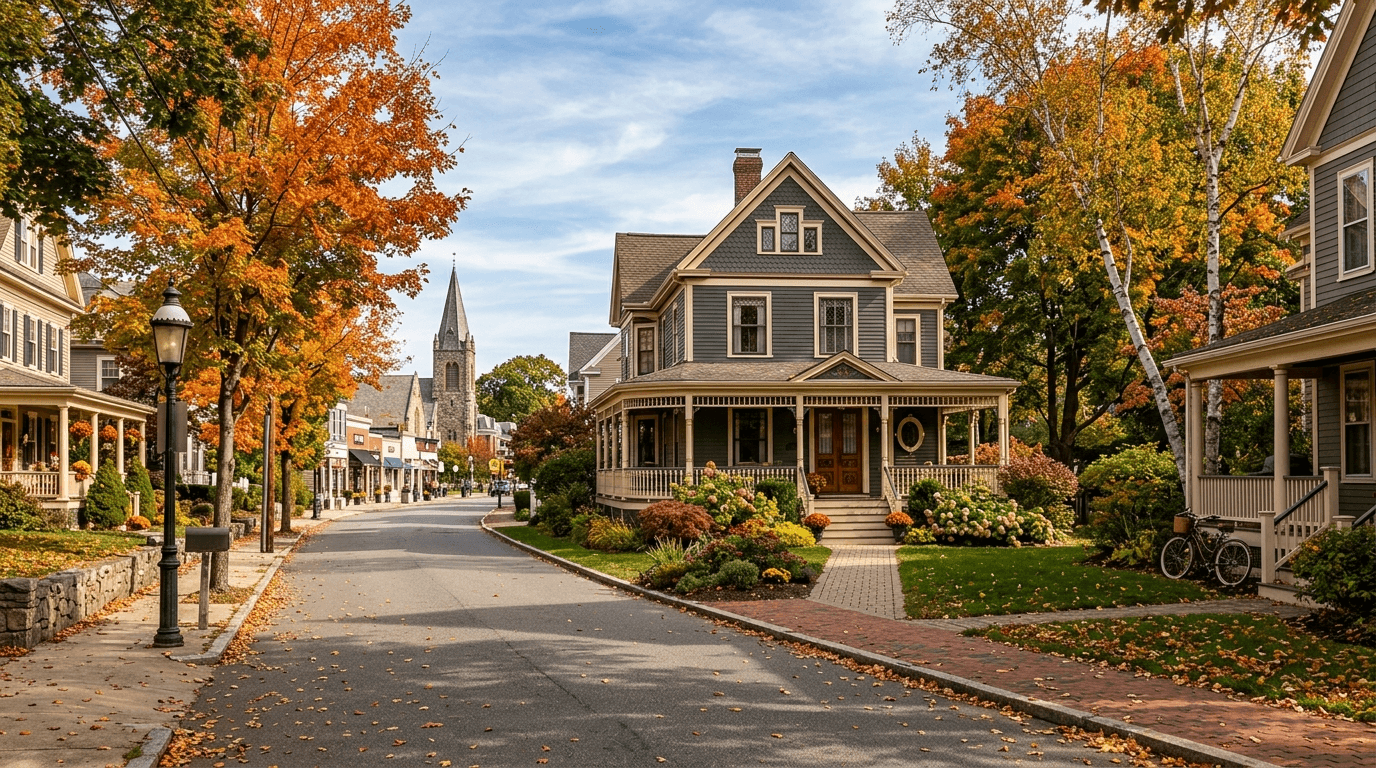
Moving to a new city with little ones is equal parts thrilling and nerve-wracking. I see it all the time. When families come to me describing what they want—tree-lined streets, great schools, an easy path back into Boston—Newton lands at the top of the list almost every time. It's a place where historic homes, friendly village centers, and world-class amenities all come together. And here's the part that matters most: the daily reality of raising young kids actually works here.
So let's get practical. The commute, the school run, the everyday errands—all of it, grounded in real numbers so you can plan with confidence.
Newton Family Relocation Snapshot: Price, Pace & Commute
A quick relocation snapshot for young families weighing Newton: high entry pricing, moderate inventory, a relatively fast-moving market, and a typical Green Line commute that should be planned around school and childcare schedules.
Spring 2026
Median Sale Price$1,450,000
Inventory (Months of Supply)3.8
Average Days on Market (Range)24 to 36
Commute
Average Commute Time to Downtown Boston35 to 45 minutes
How is the commute from Newton, MA to downtown Boston?
Newton offers one of the most reliable commutes into Boston in the western suburbs — typically a 15–25 minute drive via I-90 (the Mass Pike) in lighter traffic, or a 35–45 minute ride on the MBTA Green Line. That flexibility is a big reason young families settle here.
If you're driving, the Mass Pike is your workhorse. In light traffic, you can be downtown in 10–25 minutes. Rush hour is a different story—realistically 30–60 minutes, depending on which village you're leaving from. That range matters more than you'd think when you're juggling daycare drop-off and an office start time.
Newton Family Relocation Snapshot: Price, Pace & Commute
A quick relocation snapshot for young families weighing Newton: high entry pricing, moderate inventory, a relatively fast-moving market, and a typical Green Line commute that should be planned around school and childcare schedules.
Spring 2026
Median Sale Price$1,450,000
Inventory (Months of Supply)3.8
Average Days on Market (Range)24 to 36
Commute
Average Commute Time to Downtown Boston35 to 45 minutes
Prefer to leave the car at home? The Green Line (D Branch) and Commuter Rail get you downtown in roughly 35–45 minutes. Here's something I always tell relocating families, because I'd rather you hear it from me than discover it later: set honest expectations. Transit here is dependable, but a true door-to-desk 20-minute trip is tough to pull off consistently from Newton. That's the kind of candid detail neighbors trade in local forums, and it's only fair you know it upfront.
Now for the good news parents love. Parking is rarely the headache it is closer to the city. Most of Newton's historic homes come with driveway parking—a genuine luxury when you're wrangling strollers and car seats—and stations like Riverside and Woodland have dedicated commuter lots for park-and-ride days. When clients compare Newton to the denser parts of Greater Boston, this quiet village feel with private parking is exactly what wins them over.
Is Newton, MA good for families, and what are the schools like?
Yes — Newton is consistently one of the most sought-after districts in Massachusetts for families, with a broad network of well-regarded public schools and a safe, community-centered feel. For parents with children under five, schools are usually the very first question. And it's the right one to ask.
The district is large and intentionally neighborhood-based, which keeps drop-off close to home for most families.
Newton Public Schools by Grade Level
Newton’s public-school footprint includes a broad elementary network, which matters for young families comparing neighborhoods, school assignments, and daily drop-off logistics.
Newton’s public-school footprint includes a broad elementary network, which matters for young families comparing neighborhoods, school assignments, and daily drop-off logistics.
With 15 elementary schools, 4 middle schools, and 2 high schools, it's that elementary footprint that matters most when your kids are young. Most historic neighborhoods sit within a one-to-two-mile radius of a strong elementary school like Mason-Rice or Bowen—close enough that the school run is a short drive or an easy walk. Newton North and Newton South High Schools are centrally located too, typically a 5-to-10-minute drive or a safe, short bus ride from most homes.
If you're planning ahead, kindergarten enrollment trends are a useful signal of class sizes and capacity.
Newton Kindergarten Enrollment: History & Projections
Kindergarten enrollment is a useful planning signal for families with children under five. The long-term series shows Newton’s K cohort below its early-2010s highs, with projections stabilizing in the mid-to-high 600s by 2027.
History
Projections
Kindergarten enrollment is a useful planning signal for families with children under five. The long-term series shows Newton’s K cohort below its early-2010s highs, with projections stabilizing in the mid-to-high 600s by 2027.
You'll notice Newton's kindergarten cohort has settled below its early-2010s highs, with projections leveling off in the mid-to-high 600s by 2027. In practice, that often means classrooms aren't bursting at the seams—a quiet reassurance when you're thinking about the long arc of your child's education.
The district's investment level is another planning detail worth understanding.
$314,574,126Total Voted Budget
Newton Public Schools FY27 Budget & THRIVE 2030
For relocating families, the FY27 Newton Public Schools budget is a key logistics item: it funds the next school year, includes a 5.75% increase from FY26, and adds middle-school math capacity under the district’s THRIVE 2030 planning framework.
The voted $314,574,126 FY27 budget—a 5.75% increase over FY26—funds the coming school year and adds capacity in areas like middle-school math under the district's THRIVE 2030 framework. For relocating families, this is a logistics item as much as a values statement. It tells you the very year your child enrolls is funded and forward-looking.
What are daily errands and amenities like in Newton, MA?
Day-to-day life in Newton is built around walkable village centers, so groceries, pharmacies, parks, and even world-class healthcare are usually just minutes from home. This is the part that makes the early-parenting years feel manageable.
Grocery runs are a breeze. National favorites like Trader Joe's and Star Market sit within a short drive of most villages, and you're rarely more than 5–10 minutes from a full-service store. Pharmacies and gas stations cluster naturally around centers like Newton Centre and Newtonville, so you can fold errands into the school run without crisscrossing the city.
A few quick notes for new families:
•Walkability varies by village. Newton Centre, West Newton, and Newtonville are the most walkable, while Chestnut Hill, Oak Hill, and Waban lean more car-dependent. If stroller-friendly errands matter to you, point yourself toward the village centers.
•Parks are everywhere. Spots like Cold Spring Park offer scenic trails and open space—a daily-life perk for families with little ones who need to burn off energy.
•Childcare and resources are close. Between the daycares, preschools, and the beloved Newton Free Library, the everyday infrastructure of raising young kids is genuinely convenient here.
And then there's healthcare—the question every parent eventually asks. Newton-Wellesley Hospital sits right within the city limits, putting emergency and pediatric care just minutes from most homes. When you've got a toddler running a fever at 2 a.m., that kind of proximity is priceless.
What should families budget for in Newton, MA?
Newton is a premium market, so it's worth understanding both the entry price and the carrying costs before you fall in love with a home. The Spring 2026 median sale price sits at $1,450,000, with inventory around 3.8 months and homes moving in roughly 24 to 36 days—a market that rewards preparation.
There's encouraging news on taxes, though: Newton's rates are actually quite reasonable relative to the state.
Newton Property Tax Rates: FY2025 vs FY2026
Newton’s FY2026 residential and commercial property tax rates are slightly lower than FY2025. For buyers, the residential rate should be read alongside assessed values, since high home prices can still translate into substantial annual tax bills.
FY2025
FY2026
Newton’s FY2026 residential and commercial property tax rates are slightly lower than FY2025. For buyers, the residential rate should be read alongside assessed values, since high home prices can still translate into substantial annual tax bills.
The FY2026 residential rate dipped slightly to $9.69 per $1,000 from $9.80 in FY2025—comfortably below the statewide average of $12.18. Just keep in mind that with high assessed values, even a competitive rate adds up to a meaningful annual bill. Always read the rate alongside the home's assessment.
When families weigh Newton against the denser parts of Greater Boston, here's the honest trade-off: you're paying a premium, but you're buying into top schools, private driveways, walkable villages, and a real sense of community. For the families I work with, that combination is exactly what "home" is supposed to feel like.
If you'd like help mapping specific villages to your commute and school priorities—in English or Korean—I'm always happy to walk through it with you. 안녕하세요!
Local Spots & Favorites
Newton Market Statistics
Median sale price, days on market, and closed sales by property type.
In July 2026, the median sale price for homes in Newton, MA was $1,597,500, up 2.2% from a year earlier.
Yes. Newton, MA is one of the most sought-after Massachusetts communities for families because it combines well-regarded public schools, a safe community-centered feel, village centers, parks, and convenient access to Boston.
What are the schools like in Newton, MA?
Newton Public Schools has 15 elementary schools, 4 middle schools, and 2 high schools. The district is neighborhood-based, so many families live within about 1 to 2 miles of an elementary school, with Newton North and Newton South typically a 5-to-10-minute drive or short bus ride from many homes.
How long is the commute from Newton, MA to Boston?
The commute from Newton, MA to downtown Boston is typically 15 to 25 minutes by car in lighter traffic via I-90, with rush hour often stretching to 30 to 60 minutes depending on the village. Public transit options, including the MBTA Green Line D Branch and Commuter Rail, generally take about 35 to 45 minutes to reach downtown.
Is Newton, MA easy to get around without relying only on a car?
Newton, MA has useful transportation options for families who need both driving and transit flexibility. Many historic homes have driveway parking, and stations such as Riverside and Woodland offer dedicated commuter lots for park-and-ride trips.
What are everyday errands like for families in Newton, MA?
Daily errands in Newton, MA are convenient because village centers place groceries, pharmacies, parks, and services close to many neighborhoods. Newton Centre, West Newton, and Newtonville are among the most walkable areas, while Chestnut Hill, Oak Hill, and Waban are more car-dependent.
How much does it cost to buy a home in Newton, MA?
Newton, MA is a premium housing market, with a Spring 2026 median sale price of $1,450,000. Inventory is around 3.8 months, and homes typically move in about 24 to 36 days, so buyers benefit from being financially prepared before starting a search.
What should condo and townhome buyers budget for in Newton, MA?
Families comparing condos, townhomes, and single-family homes in Newton, MA should factor in the purchase price, assessed value, property taxes, and any property-specific monthly carrying costs. The FY2026 residential tax rate is $9.69 per $1,000, which is below the statewide average of $12.18, but high assessed values can still create a meaningful annual tax bill.