# Brookline's Owner-Occupancy STR Rule: What Multifamily Investors Need to Know
Quick Takeaways:
•The bottom line: If you buy a Brookline multifamily as a pure investment and never live in it, the town's short-term rental bylaw likely bars you from running any unit as a short-term rental (STR) — so nightly Airbnb income has no place in your pro forma (the projected income-and-expense math for the deal). Confirm the current rules with the Town of Brookline or your agent before you offer.
•The rule: Short-term stays are generally permitted only in the owner's own primary residence — verify the exact day thresholds and primary-residence test that apply.
•The escape hatch: Longer furnished stays fall outside STR rules entirely, so mid-term furnished leases to medical and academic tenants are the compliant premium play for absentee owners.
•The action: Verify eligibility and ownership structure before you offer, and underwrite to long-term rents only.
Can an absentee Brookline investor underwrite Airbnb income?
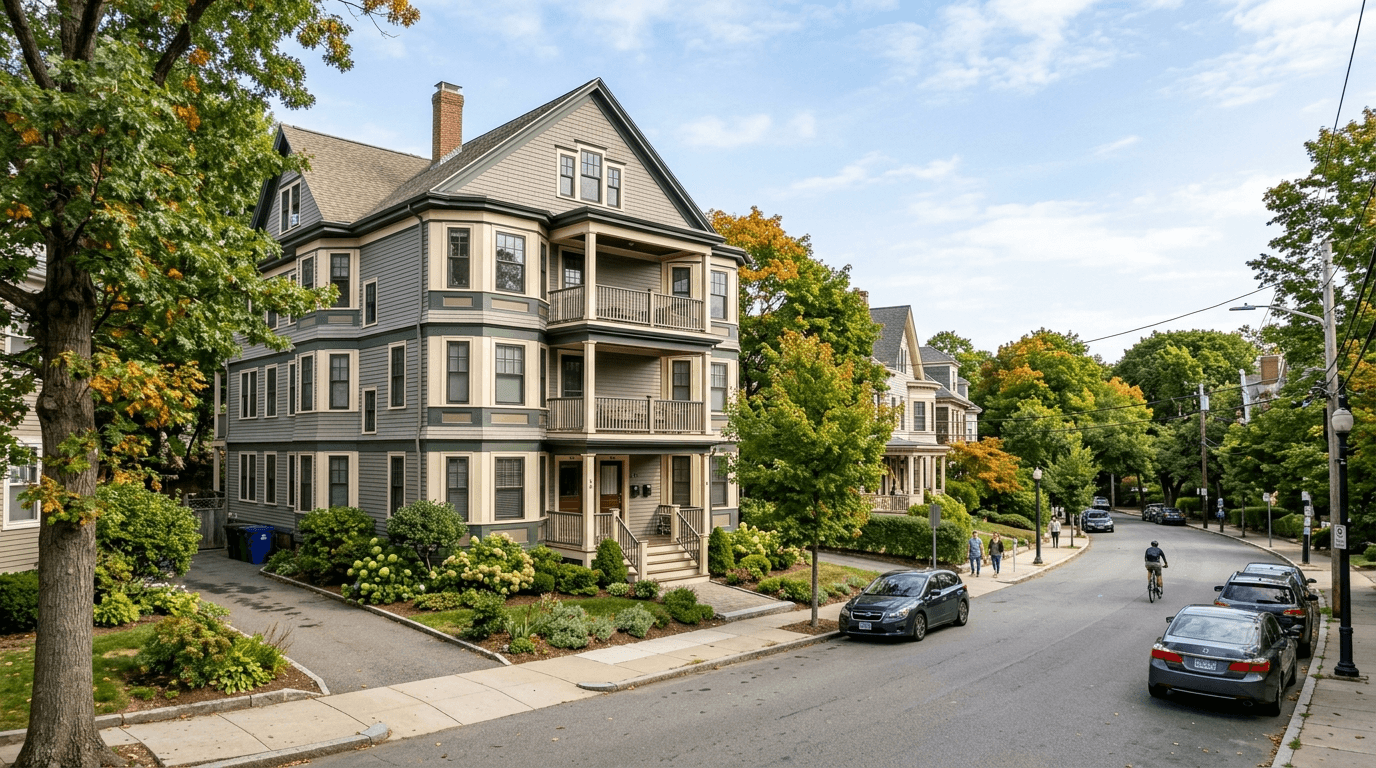
Picture the pitch: buy a three-family in Brookline, furnish the units, list them on Airbnb, and let the nightly income carry the deal.
For a non-owner-occupied investor, that pitch falls apart fast. Brookline's short-term rental bylaw hinges on owner occupancy — short-term stays are permitted only in the owner's primary residence. Confirm the current definition, day thresholds, and primary-residence test with the Town or your agent, since these details drive everything that follows and may shift over time.
If you're buying purely as an investment and won't live there:
Do not count Airbnb-style income in your pro forma.
For non-owner-occupied units, that revenue likely isn't legal to begin with — confirm before you build a deal around it.
What does the owner-occupancy rule actually allow?
The rule centers on your primary residence — the home where you genuinely live, provable through a deed, driver's license, or utility bills. For an owner-occupant, the bylaw generally outlines a few paths, though you should confirm specifics with the Town:
•Limited Share: rent a bedroom in your primary residence while you're present.
•Home Share: rent your whole primary unit, subject to bedroom and guest limits.
•Owner-Adjacent: live in one unit of a two- or three-family and rent one secondary unit.
So why not just live in one unit and run the others as short-term rentals? Because these paths are built around your primary residence, not a passive STR business. Confirm with the Town whether non-occupied units can be rented nightly at all, or only on longer leases. Either way, the trade-off is real: you have to actually live on-site. That turns the deal into a house-hack — where you live in one unit and rent the others to help cover the mortgage — rather than the hands-off investment the pitch promises.
How should you rewrite the pro forma?
For a non-owner-occupied Brookline multifamily, the clean move is blunt:
Set short-term rental revenue to zero.
Build your base case around long-term lease rents — the defensible number once you factor in purchase price, debt service (loan payments), taxes, insurance, repairs, and vacancy (empty-unit periods). If the deal only pencils out because of nightly STR income, it doesn't work for an absentee buyer.
Legal upside still exists. The main compliant alternative is a longer furnished rental — stays that run long enough to fall outside the short-term definition (confirm the exact threshold with the Town). That opens the door to mid-term furnished leases for medical, academic, relocation, or corporate tenants — a strong fit given Brookline's nearby hospitals, universities, and research employers — and one that can command a premium over a standard empty apartment without illegal nightly turnover.
What if other owners are ignoring the rule?
You might think: "But people still list units online." Some do. That doesn't mean you should build your offer around it.
The underwriting rule is practical: don't pay today for income you may be forced to stop tomorrow. If a broker package shows Airbnb income for non-owner-occupied units, treat it as non-recurring, and ask for a rent roll based on legal long-term or longer furnished leases instead.
What should you verify before making an offer?
Before you write an offer on a Brookline two- or three-family, confirm three things:
1. Will you live there as your primary residence? If not, don't underwrite STR income.
2. Does the ownership structure qualify? Make sure the entity, title, and unit setup match the current bylaw.
3. What rent works without nightly stays? Run the numbers on long-term leases and longer furnished rentals.
Brookline can still be a strong multifamily market — but non-owner-occupied STR income shouldn't factor into your purchase math. Send over the address, unit mix, and asking price, and we'll walk through the legal rent assumptions before you offer.